As important as it is to have a Transportation Management System (TMS) for efficient and streamlined goods movement, choosing the “ best fit ” for specific business requirements is crucial too.
As consumer expectations become more nuanced and convenience-driven, and businesses aim at reducing the costs for healthier bottom lines, digitized transportation management is becoming essential.
But then again, how can businesses decide which TMS aligns the most with their requirements and what are some critical capabilities that they must focus on?
Here, we share answers to these and other such questions that will definitely help you make the right choice of a TMS.
What is a TMS and Why Is It Important?
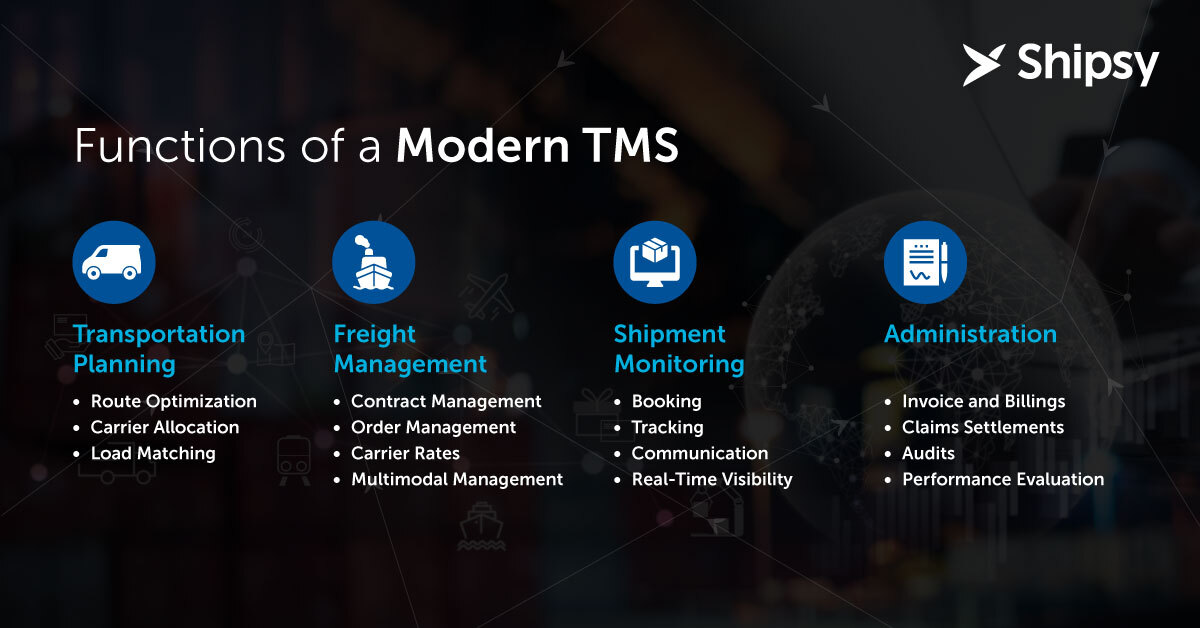
TMS stands for Transportation Management System, and it helps businesses manage all the components of transportation, namely - vendors, indents, vehicle tracking, communication, transactions, etc. While the core features remain the same, TMS solutions can have diverse offerings, such as reporting and analytics, third-party integrations for payments, order management, etc.
It helps businesses overcome significant transportation challenges, leading to cost savings, improved customer service, and enhanced supply chain visibility. Transportation management software offers critical capabilities for automating processes, optimizing routes, and providing real-time insights.
8 Critical Capabilities of a Modern TMS: Key Considerations to Make the Right Choice for Your Business
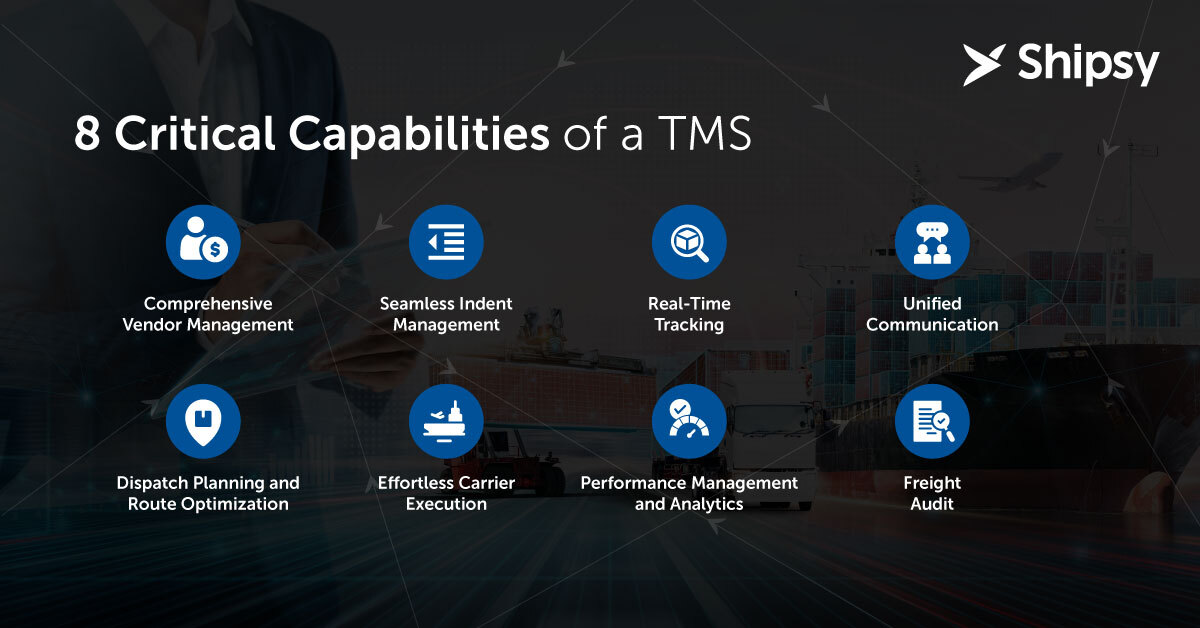
#1 - Comprehensive Vendor Management
A robust Transportation Management System streamlines vendor management via a centralized platform for all-inclusive vendor-related process management.
Advanced functionalities, such as vendor portals facilitate easier collaboration with multiple vendors, faster vendor onboarding, and empower businesses to choose the best vendors for specific shipments based on serviceability, costs, past performances, and other such parameters.
All in all, vendor management modules ensure effective collaboration with vendors, from procurement to order fulfillment, fostering better relationships and cost-effective sourcing.
#2 - Seamless Indent Management
Transportation Management Systems simplify indent management by automating the business processes of creating, tracking, and closing the indents.
Businesses can easily upload lists of vendors with rate contracts, serviceability data, vehicle capacity, available geographies, etc.
They can set specific vendor selection and prioritization criteria based on shipment and business requirements. As all the steps are done via the software, the effort and time spent in manual indenting are reduced significantly.
#3 - Real-Time Tracking
The ability to track vehicles in real-time is one of the most critical capabilities of a Transportation Management System. This can be done in multiple ways, such as SIM-based tracking, GPS tracking, etc. Real-time vehicle tracking capabilities reduce delays and provide visibility into the fleet’s location.
It enables proactive decision-making, helps in route optimization, ensures on-time deliveries, and enhances overall logistics efficiency.
The real-time shipment whereabouts can be shared with the relevant stakeholders, such as end customers, hub managers, etc.
#4 - Unified Communication
Transportation Management Systems offer a centralized platform for shippers, carriers, and consignees to communicate. It not only streamlines information sharing but also ensures that critical data, such as order updates, delivery schedules, and inventory levels, are accessible to all parties in real time.
This helps avoid confusion, reduces reliance on manual and individual communication, and fosters seamless collaboration across complex transportation networks.
#5 - Dispatch Planning and Route Optimization
Efficient dispatch planning is also one of the critical capabilities of modern TMS. A transportation management system offers advanced functionalities to optimize routes, allocate orders to appropriate carriers, and schedule pickups and deliveries, ensuring cost-effective and efficient dispatching.
Advanced transportation management systems also come with in-built route optimizers that create highly efficient routes and cut down transportation expenses.
Transportation management systems offer fleet management, load consolidation, and creating the right vehicle mix based on business preferences and requirements. This helps optimize and reduce transportation costs. Managers can create the most optimal loading sequences and create the most optimal route plans.
#6 - Effortless Carrier Execution
With in-built operational workflow for each task, such as vendor indenting, 3PL Booking, electronic Proof of Delivery (e-PoD) & electronic Lorry Receipt (e-LR), and live shipment tracking, a Transportation Management System makes the entire carrier execution a cakewalk.
Transportation managers have a real-time view of all the critical information and can access the information related to receipts, delivery proofs, and indents as and when required.
#7 - Performance Management and Analytics
Smart Transportation Management Systems come with in-built critical capabilities to set and track KPIs for performance analysis of individual carriers and drivers. This amplifies the overall field productivity and reduces inefficiencies by deprioritizing vendors/carriers with poor performance.
Further, the advanced transportation management software offers analytics and reporting capabilities for business intelligence that help managers make strategic business decisions and optimize transportation based on trends and business insights.
#8 - Freight Audit
Another critical must-have for Transportation Management Systems is the ability to generate invoices in an automated manner, ensuring safe and secure transaction management, penalty calculations, audits, etc.
Digital freight audits instill trust and transparency in the entire transportation ecosystem. Automated verification of carrier invoices against agreed-upon rates and terms eliminates overcharges and discrepancies, leading to cost savings and accurate financial reconciliation.
End Your Search for a TMS With Shipsy
Shipsy’s cloud-based TMS solution comes with in-built intelligent algorithms for exhaustive automation of transportation processes and offers multiple features apart from all the critical capabilities shared above. The solution integrates seamlessly with the existing tech infrastructure and third-party integrations.
With more than 120 3PL integrations, an in-built vendor portal, digitized contract agreements, and customizable feature sets, Shipsy’s TMS aligns perfectly with the different nuanced transportation needs of diverse industries and helps businesses unlock:
- 14% decrease in overall transportation costs
- 20% decrease in average delivery time
- 40% decrease in market vehicle requirements
For more information, or to catch the product in action, please schedule your personalized demo today!